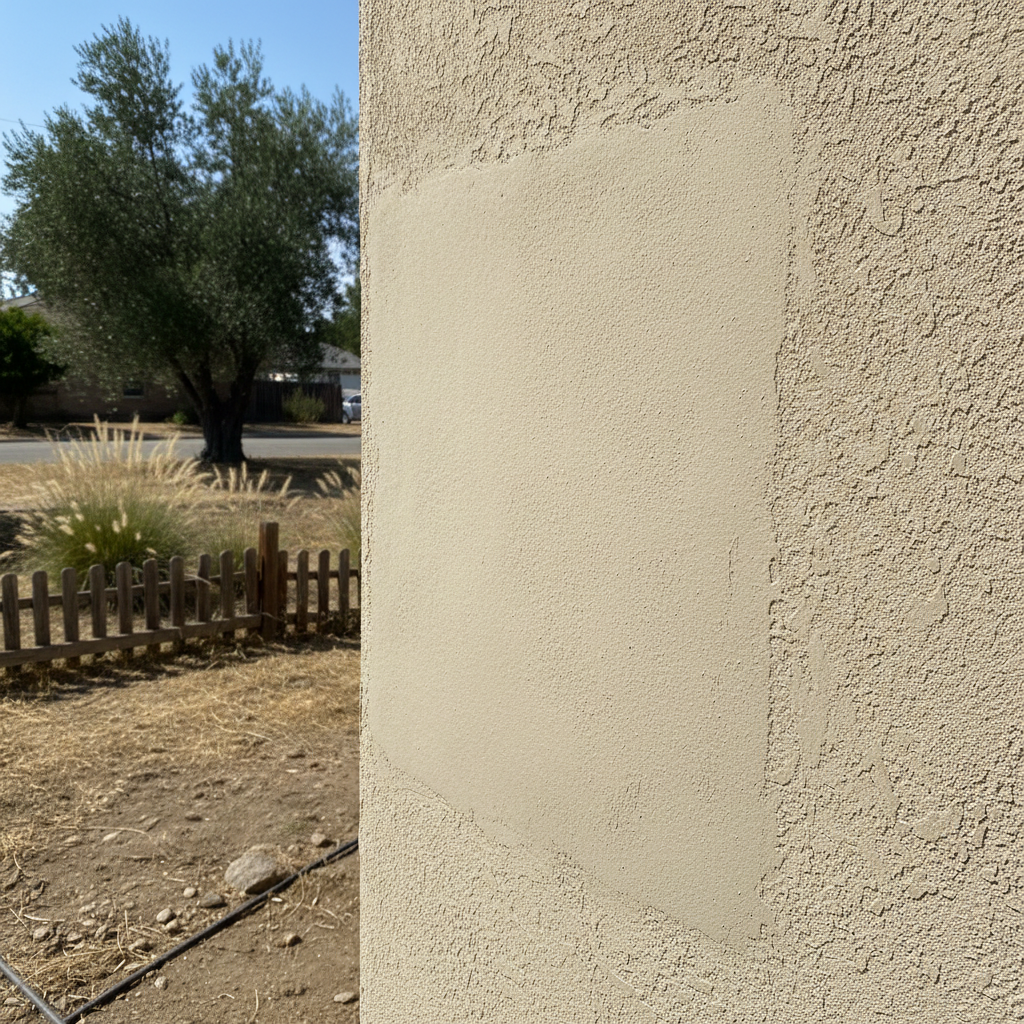
Alright, let's talk stucco repair. You're walking around your house, maybe watering the roses, and then – boom – you spot a crack. Or a chip. Maybe a whole chunk's even missing. Your first thought might be, "Can I fix this myself?" And often, for the small stuff, the answer is yes. But there's a line, and knowing exactly where that line is can save you a whole lot of headache and money.
Before You Grab That Trowel: Assess the Damage
First things first, take a good, hard look at what you're actually dealing with. Not all stucco damage is created equal, you know? A hairline crack, say, less than 1/16th of an inch wide, is usually just a surface issue. It's often caused by normal settling or the expansion and contraction from our crazy Fresno temperatures – you know how it gets, from 100 degrees in July to 40 in January. These are generally pretty easy DIY fixes.
Then you've got larger cracks, wider than 1/8th of an inch, or ones that run horizontally or in a stair-step pattern. These are red flags. They can mean structural movement, water getting in, or even foundation problems. If you see cracks like that, especially around windows or doors, or if you've got soft spots, bulging, or discoloration, put down the patching compound. Seriously. That's a job for a professional. You don't want to just patch over a bigger problem; you need to address the root cause.
Also, think about how old your stucco is. Older homes, especially those built in the 60s or 70s in areas like the Tower District, might have a different stucco mix or application than newer homes. Matching color and texture can be tricky, even for small repairs, if you don't really know what you're doing.
DIY Stucco Repair: What You Can Tackle
For those small, non-structural cracks and minor chips, you absolutely can do it yourself. Here's the basic rundown:
- Clean the Area: Get rid of any loose debris, dirt, or old paint. A wire brush works well for this. You want a clean, stable surface for your patch to stick to.
- Moisten the Surface: Lightly mist the area with water. This stops the dry stucco from sucking the moisture out of your patching material too quickly, which can lead to a weak bond.
- Apply the Patch: For small cracks, a good quality acrylic caulk or an elastomeric patching compound is your friend. Squeeze it into the crack, then smooth it out with a putty knife or trowel. For chips or small holes, you'll need a stucco patching mix. Mix it according to the directions, apply it in thin layers, and build it up until it's flush with the existing stucco.
- Texture Match (the tricky part): This is where DIY gets a little artistic, believe me. If your stucco has a smooth finish, it's easier. If it's got a sand finish, skip trowel, or dash finish, you'll need to try and replicate that texture while the patch is still wet. You can use a sponge, a brush, or even a small trowel with a flicking motion. Practice on a scrap piece of wood first if you're unsure – it helps.
- Cure and Paint: Let the patch cure completely according to the product instructions. Then, paint it to match your existing stucco. Don't skip this step, or your repair will stick out like a sore thumb.
It's not rocket science for these small fixes, but it does take patience and a bit of a steady hand. You can find all the materials you need at your local hardware store here in Fresno.
When to Call a Pro (Like Top Line Fresno Stucco)
Look, I'm all for saving a buck, but some jobs are just too big or too complex for a homeowner to tackle. Here's when you absolutely should pick up the phone and call a professional stucco contractor:
- Large Cracks or Structural Concerns: As I mentioned, wide cracks, stair-step cracks, or anything that suggests movement in your home's foundation or framing.
- Extensive Damage: If you've got large sections of stucco crumbling, falling off, or showing signs of widespread water damage.
- Water Intrusion: If you suspect water is getting behind your stucco, you need an expert to diagnose and fix the issue properly, not just patch over it. This can lead to rot, mold, and serious structural problems if ignored.
- Matching Complex Textures or Colors: If you have a highly textured finish or a custom color that's hard to replicate, a pro has the experience and tools to get a near-perfect match. We've got access to specialized materials and techniques that aren't available to the average DIYer.
- Repairs Above Ground Level: Working on ladders or scaffolding can be dangerous. If the damage is high up on your second story, it's safer to let someone with the right equipment and insurance handle it.
Trying to DIY a big stucco repair can often lead to more expensive problems down the road. You might not fix the underlying issue, or you might make the cosmetic damage worse. Sometimes, the best DIY is knowing when to delegate. We see it all the time – folks try to fix a big problem, and it ends up costing them more to have us come in and redo it properly.
After the Repair: Keep an Eye Out
Once the repair is done, whether you did it or we did, don't just forget about it. Stucco needs a little love and attention. Do a walk-around inspection a couple of times a year, especially after heavy rains or strong winds. Look for new cracks, discoloration, or any signs that your repair isn't holding up. Catching small issues early is always easier and cheaper than waiting for them to become big ones.
So, for those little dings, go ahead and get your hands dirty. For anything more serious, don't hesitate to reach out. We're here to help keep your Fresno home looking good and protected.